University of Minnesota Athletics
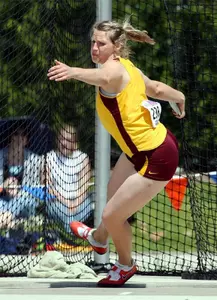
Olympic Dreams: Liz Podominick
6/14/2012 12:00:00 AM | Women's Track & Field
June 14, 2012
As the U.S. Olympic Team Trials approach (June 21-25, June 28-July 1), a handful of former Minnesota track & field athletes are training for the chance to compete in London. GopherSports.com recently caught up with some of these former Golden Gophers.
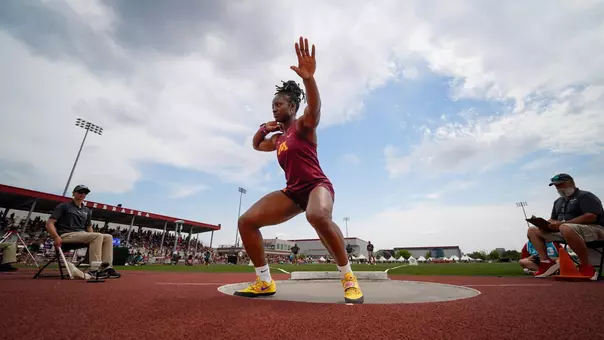
At the University of Minnesota, Liz Podominick was a two-sport student-athlete. She played basketball for three seasons before deciding to focus solely on track & field. Podominick won Big Ten titles in indoor shot put (2008), outdoor shot put (2005 and 2006), and discus (2005). She recently qualified for the 2012 Olympic Trials with a throw over 60 meters, and will continue training toward her goal of competing in London. The Olympic hopeful took some time to talk to GopherSports.com about her quest for London, her time at Minnesota, and some of her other experiences since graduation.
GopherSports: With a new personal at the Tucson meet, you also automatically qualified for the Olympic trials. What went especially well that day, and how did it feel to find out your mark was 60-plus meters?
Liz Podominick: Anytime you can have some great weather helps, but I honestly just worked on relaxing that day and not thinking. In previous meets, I had a tendency to over think things when I stepped into the ring, causing me to tense up. I had been doing a lot of great things at practice that week and just let my muscle memory take over. Athletes often say things just "clicked" and that was the case for me as well. The throw felt really easy and I was almost in shock when they announced the distance since I could not see where it landed. Breaking the 60-meter barrier is such a big milestone for me and one that I knew I was capable of this season. The next step is to be consistent at that distance.
GS: What will you be doing to prepare during the final weeks before trials?
LP: At this point, the focus is on fine tuning things and maximizing my strengths. It's easy to pick apart a throw and focus on the things I am not doing correctly rather than notice the parts that I am doing really well. There are just some habits I have that I won't be able to change this season, but I have come a long way and can still do some great things. Every throw I take, I feel closer to something even bigger and farther than what I have done. I have faith that it will come together at the right time.
GS: You tried to make the Olympic team in 2008 as well. How does having that experience under your belt help you this time around?
LP: I honestly was not ready for anything in 2008 and really did not have a clue on what it would take to get to an elite level even though I thought I did at the time. In 2008, I wanted to just make the Olympic Trials and missed that goal by a couple of feet. I did not have the maturity and strength level, throw count or understanding of the event that I have now. A lot of my focus in college was on basketball and shot put and the journey to throwing the disc took a bit longer. So much has happened in the last four years to get my ready for this time around, including the belief that I could compete against the best in the nation to make the Olympic Team, and all of it makes me feel more appreciative and blessed to be where I am at today.
GS: How tough was it to battle from the injuries you had?
LP: Overall, I have been very lucky with injuries in that they have only been minor setbacks. It's never easy when an athlete has to back off on their training, especially in the crucial time leading up to the Olympics. My injuries have been more "freak" accidents, like falling on a drill, and then being too stubborn to admit that I need some treatment, rest and rehab. I have become better at asking for help when needed and controlling how I react to the situation. Everything happens for a reason and is part of God's plan, including injuries, and I have to remind myself of that when injuries happen.
GS: Are there any specific things you learned from your Gopher career that have been especially useful to you in training and competition?
LP: It would take hours to list all of the things being a Gopher prepared me for in life. One of the biggest things I learned was being thankful for the support team that surrounds an athlete, including other teammates, coaches, sport med, facilities, family and friends, officials, etc. When I moved out to Colorado, I had to rebuild my support network and it took some time. I still thank all the officials that run the event, regardless of how I do, because that is something (Gary) Wilson, (Matt) Bingle and Lynne (Anderson) ingrained in me when I was on the team. I also get comments all the time on my really good lifting technique and I have Carol Happ to thank for that.
Being a Minnesota gal and training there for a good chunk of my life has also made me prepared for any less than ideal training conditions that are thrown my way. I remember one year at Big Tens the weather was horrible and while other teams were complaining, we made it a "party." Not only did we not let the weather bother us, but we won that year. Anytime it's cold, rainy, windy or just plain ugly outside, I know I can handle it because I have been there before. It has made me a tougher competitor, both mentally and physically.
GS: What does it mean to see other former Gophers like Jamie Cheever, Heather (Dorniden) Kampf, and Gabriele Anderson working toward the Olympics?
LP: Once a Gopher, always a Gopher. Cheeves, Heather and Gabe are such wonderful people, and even though we are all done with our collegiate careers, I still feel like we are part of the team. I continue to track them as they pursue their running careers and feel so much pride that we came from such a great program. I think it says so much about the program that it has prepared us for a chance to make the Olympic Team, especially since our program is not known by everyone outside of the Midwest. Life as a post-collegiate athlete is not easy or glamorous and it makes it a bit easier for me knowing that there are other teammates going through similar struggles. I did not realize that I took the team camaraderie for granted until I was training on my own. I will definitely be cheering for them loudly at the Trials when I am not competing.
GS: Since graduating from the U, you have had some sports job experience—from working with the USA Figure Skating Team to coaching high schoolers—in addition to training for your own events. What has been most rewarding about those experiences?
LP: I always take something away from all my work experiences. Working on the administrative side of sports has made me appreciative of all the hard work and preparation it takes for an event to happen. I gained so much understanding of what it takes to be an elite athlete and it has made me a more organized and proactive athlete. It was very rewarding to see athletes that I really got to know succeed and be a small part in helping them get there.
One of the biggest things I miss with my current training situation is being a coach. I loved going to practice every day and seeing those breakthroughs athletes would have when something you said or showed clicked. I was able to give back to a program that started my throwing career and hopefully influence the next generation of throwers. So many high school female throwers don't get to see another elite female athlete who is comfortable with her body and going after something that so many people consider "masculine." I enjoyed breaking those stereotypes and would like to get back into coaching as soon as possible.
GS: You are focusing on discus now, but you still hold the Minnesota state high school record in shot put. Is it cool to still have your name at the top of the record books?
LP: While it is very flattering to have my name listed, records are made to be broken. The 50-foot barrier was a huge milestone to break in high school and I really hope other female throwers get to experience that as well, especially since it puts them and Minnesota track and field on the national level. I would love to see more females get involved in throwing because it is such a great sport, and if breaking my record it a motivator for another athlete's training, then I hope someone does throw farther. It is kind of ironic that my record is in the shot put, but it did get me throwing the discus and ultimately leading me to where I am today.
| Follow Gopher Track: |  |  | Follow @gopherwtrackcc |