.png&width=42&height=42&type=webp)

University of Minnesota Athletics
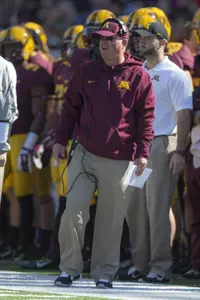
Kill Featured By CNN, Men's Health
10/15/2014 12:00:00 AM | Football
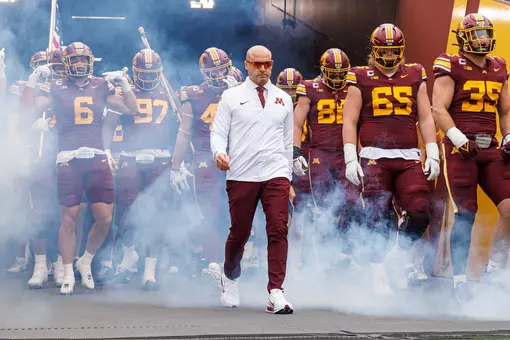
Coach Jerry Kill's Minnesota Golden Gophers are off to a 5-1 start this season and have played tough, deliberate football. Most teams tend to take on the attitude of their head coach and the Gophers are no different, as Minnesota has worked hard to earn its 5-1 mark.
Hard working has been a calling card of Kill's teams no matter where he has coached. He doesn't use a lot of slogans or flashy motivational techniques while coaching. Instead, he reminds his team that hard work - continual hard work - will get them to where they want to be. He tells them that they need to be able to overcome obstacles, as they will face adversity in football and in life. He also reminds his team to savor success and enjoy each moment, because you never know when it can be taken away.
The hard-working Kill was recently profiled by CNN.com and Men's Health about how he overcomes adversity as a football coach who has epilepsy. You can read a portion of the CNN.com story below (full story can be read here) and you can pick up a copy of the November issue of Men's Health to read their feature on Minnesota's head football coach.
By Wayne Drash, CNN
University of Minnesota head football coach Jerry Kill fields question after question. Reporters want to know less about the quality of his football team and more about his health.
Specifically, his seizures. The ones that left stadiums silent when he fell to the turf.
What's it like to step onto a field knowing you have epilepsy?
How long has it been since your last seizure?
Will you return to the sidelines or coach from the press box?
It's the second day of the Big Ten media blitz, and Coach Kill sits at a table at the Hilton Chicago for two hours. One by one, the reporters approach him. Kill jokes with his PR guy how he wishes he could sit them down, answer their questions all at once and be done.
During a break, the coach checks his email. A father writes saying he lost his daughter to a seizure. Keep fighting for us, the dad says. It's the third time in less than a month that a family has written to tell him a loved one has died from epilepsy.
Those messages really sink in, a reminder that his work extends far beyond the football field.
The author and his son mug for the camera during their visit to the Cleveland Clinic, where Billy was evaluated for brain surgery.
Courtesy Wayne Drash
I, too, have questions for Kill, but they're more personal. Epilepsy affects my family in every way. I know the fear of the father who wrote that note, but I hope to never know his pain. There are days when I grow angry and frustrated because nothing seems to help my son.
I want to ask the coach how he handles his seizures, what advice he has for families like mine. I especially want to know what compels this man to be so open about his epilepsy in a game overflowing with machismo when so many ordinary people hide from the disorder.
Kill, 53, wasn't always outspoken. He was thrust into action when scorn, hatred and ignorance were hurled his way. The accidental ambassador for epilepsy.
You can read the entire CNN.com story here.