University of Minnesota Athletics

Backpack to Briefcase: Jessica Ramberg
4/10/2017 12:00:00 AM | Women's Swimming & Diving
April 10, 2017
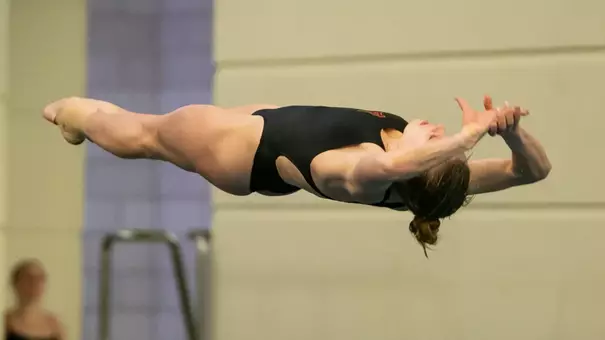
A year ago at this time, Jessica Ramberg was finishing up preparations to compete at the 2016 NCAA Women's Swimming and Diving Championships. She qualified to compete on the 1 and 3-meter springboard diving events and the 10-meter platform. She went on to earn All-America honors on the platform and graduated in May with a degree in art and studies in cinema. However, Ramberg did far more than just go to class and compete in the pool. The Forest Lake, Minn. native interned in the athletic communications office and Gopher Digital Productions area and served on the Student-Athlete Advisory Committee and ultimately was selected by the NCAA for one of its prestigious post-graduate internships at their headquarters in Indianapolis. Working in the NCAA office and traveling to various championship events, Ramberg continues to build her professional portfolio after college.
Q: Since graduating from Minnesota last spring of 2016, what have you been doing?
A: Currently I'm in a 12-month post-graduate internship with the National Collegiate Athletic Association. The NCAA is a great place to work. They focus on enhancing the experience of a student-athlete. There, I work in the digital communications department where I am on the video, social, and web teams. We create clear and concise projects that really show the excellence both academically and athletically of student-athlete in the NCAA membership.
Q: You were one of a very few to be selected to this group. Can you tell us more about it?
A: The NCAA post-graduate internship program is one full of excellence. I was fortunate enough to be one of 30 from thousands of applicants. Now I'm able to go through this program, learn about intercollegiate athletics, and learn about my professional development.
Q: When you arrived to Minnesota, did you have a plan for what you wanted to do after school?
A: Arriving to Minnesota I wasn't sure what I wanted to do after sport. I knew that I had a passion for learning, sports, and creative services. So I knew that if those three components were in my future that I would be happy.
Q: How did you develop your plan for after graduation?
A: Having an academic counselor really helped me get into the start of finding what I wanted to do after sport. My freshman year I took a careers course and that really jump started what I wanted to do with my life. After that, I turned to the student-athlete development and really pursued opportunities to build the tools and skills to prepare myself professionally.
Q: How did you stick to that plan throughout your academic career at the U of M?
A: Having the conversation with my academic counselor, my coach, and the student-athlete development really prepared me to keep that plan throughout college, to get me in the right course, and to learn about myself and what I want to do after sport.
Q: What tools did the University of Minnesota student-athlete development office provide you to help you in your professional career?
A: The student-athlete development started off with the first-year experience course my freshman year. There, I really learned the basics of what a resume was, how to be a professional, and prepare for a career after sport. Next, working on the resume workshops, critiquing and helping me get that to a very refined document was very helpful. After that, the young professionals etiquette dinner was another really great tool that student-development had. I learned how to not only properly eat a dinner with etiquette, but also learned the networking skills. Then putting that all together with Pro Day where I got to show my skills and talked with different organizations and companies to work on my networking skills.
Q: What was/were the most helpful resource(s) provided by student-athlete development to help you segue into your career?
A: Student-athlete development had resources and tools for student-athletes where we really got to engage with local organizations and companies, put yourself out there, talk about yourself and really learn how you work. That to me was very important and a huge learning experience on how to be a professional.
Q: What is one thing that student-athlete development provided you that you didn't expect or think about beforehand, but has proven to be very helpful in starting your career?
A: Student-athlete development not only provided the tools and resources I needed for my career but also developed me personally and met me where I was at in my journey in life. To me, that was huge. Learning more about my strengths, my weaknesses, my passions really brought me to where I wanted to be in a field or career or with an organization or company. Student-athlete development not only focused on what you needed to do in life after sport but also the personal growth to get you there.
Q: How did being a college athlete from a competition and training standpoint, prepare you for the next steps in your career outside of the pool?
A: Being a student-athlete and going through competitions really helped me prepare my mindset. Having a focused, hard-working, goal-setting mindset, especially with those tough competitions and that pressure. When you know how to control that and focus on the things that you can do, that helps transfer your skills to what you want to do in your career and how you can work with that day-to-day.
Q: How did you coaches support your complete development as a person, not just an athlete, at the U of M? How did they help with that process?
A: Coaches play a huge role in your experience as a student-athlete. Mine really focused on the effort and perseverance in day-to-day practices. My coach, Wenbo Chen, did his job to get me there, but he kept me accountable for achieving that goal. That mindset of being hard-working, resilient and really pushing through any troubles that come have become transferable in my career and my job.
Q: Where do you hope your career will take you in the years to come?
A: In the years to come I hope to continue in sports and developing young adults. I think sports has a powerful impact on young people's lives and being a part of that is very rewarding. I want to use my skills to educate and communicate the opportunities that people have every day.
Q: What have you taken from your student experience at the U and how can you apply it to the workplace?
A: The biggest thing I have taken away from my time as a student-athlete is the relationships I have formed. These relationships will be lifelong with my coaches, former student-athletes, and athletic administrators.
Q: What advice would she give to student-athletes today that are graduating soon?
A: Advice I would want to give to current student-thletes is to be in the moment. Take advantage of all the opportunities and experiences you have here at Minnesota because you will never find anything else like it. Be in the moment, have fun, and learn a lot about yourself.


Players Mentioned