
University of Minnesota Athletics


Alumnae Check-In: Gophers in the Medical Field
5/6/2020 1:40:00 PM | Gymnastics
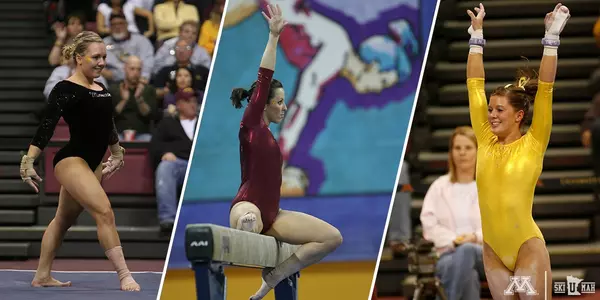
With all that is going on in the medical field, we caught up with a few Gopher Women's Gymnastics Alumnae. We checked in with Kendra Elm, Carmelina Johnson (Carabajal) and Ashley Stendahl (Mutchler) to talk about their experiences from their time at Minnesota, and how they are dealing with the impacts of Covid-19.
Kendra Elm competed all-around for the Gophers in 2007-2011. She majored in biomedical engineering and attended medical school at the University of Minnesota following graduation. Elm is currently an Emergency Medicine Physician.
Carmelina Johnson (Carabajal) competed for Minnesota from 2005-2009, winning the 2009 All-Around and Beam title at the Big Ten Championships. She was a part of the 2006 Big Ten Championship team. She earned her Bachelor of Science in kinesiology and attended nursing school after graduating. Johnson is currently working at Johanna Shores Assisted Living as the Director of Nursing
Ashley Stendahl (Mutchler) was on the team from 2004-2008 and competed in the all-around for two years before making the switch to vault, bars and beam. She was a part of the 2006 Big Ten Championship team. At Minnesota, she majored in health and wellness/public health and received an Associate Degree in nursing. Stendahl currently serves as a Hospice Nurse and Case Manager.
Gopher Sports: What was your experience at Minnesota like as a student-athlete?
Kendra Elm: I loved being a student-athlete. While you're really busy between class, practice, the training room and trying to be a regular college student outside the classroom, I wouldn't have had it any other way.
Carmelina Johnson: It is hard to put into words what my time at the U was like. It was very fun, but very strength building physically and mentally. I became the best gymnast and student I could be because of the people who surrounded me. I loved those four years so much.
Ashley Stendahl: Overall it was an amazing experience, where I gained not only educational knowledge, but knowledge of life and how to be independent. I made lifelong friends that I truly cherish and I am so grateful for.
GS: What is your favorite memory from your time on the team?
KE: Definitely celebrating a win with the team at the end of the meet in the locker room. The comradery was amazing and some of those people are still my best friends today.
CJ: I have so many amazing memories, but I have two favorite memories that come to mind right away. Winning the Big Ten Championships as a team in 2006 and then in 2009, individually winning the All-Around and Beam titles at the Big Ten Championships.
AS: Winning Big Tens my Sophomore year and earning first place on Vault at Big Tens my Freshman year.
GS: How did being a gymnastics student-athlete help prepare you for the rigour of your career-path?
KE: It certainly taught me how to prioritize, take things one step at a time and think about the little things. My job now is a combination of fast paced, sick patients and complex holistic care. I often have multiple balls in the air and being a student-athlete helped me learn to manage all that with ease.
CJ: I think being a gymnast in general preps you to be a hard worker and endure through tough times. Gymnasts are always trying to reach that 10.0 and it always translates into other aspects of life. These qualities make great leaders and I try to use the leadership techniques I learned at the U in my work today. Leading with a positive attitude, leading by example and supporting your team or coworkers by doing whatever it takes.
AS: It taught me the ability to set goals and work hard to achieve them, and how to persevere through tough situations.
GS: What made you want to go into the medical field?
KE: I always liked medicine. I chose my undergraduate, biomedical engineering, because I loved to solve puzzles and build things. What I realized in school is that I really like working with people, and that was missing in my career path, so I made the switch to medicine and couldn't be happier.
CJ: I always liked science growing up and knew I would do something in the medical field. When I became a nurse assistant after I graduated from the U, I just knew I was meant to help people. That's when I decided to go back to school to get my RN license.
AS: I have always enjoyed caring for and helping others. Once I started exploring what field I wanted to go into, it was very obvious this is what I was meant to do.
GS: What is your favorite part about working in the medical field?
KE: The people for sure. I see people on the best and worst days of their lives. If I can make their worst day a little less bad and their best day better, my job is all worth it.
CJ: I love knowing that every day, I am helping others. It is something that I want to teach my kids because at the end of the day, life is about helping others. The reward is how great it feels to know you helped someone today and created a smile, if nothing else.
AS: My favorite part is knowing that I'm making a difference in other people's lives.
GS: How have you been feeling the impact of Covid-19 in your professional life?
KE: The Emergency Room has changed dramatically during Covid-19 for the safety of not only the patients but all of us who work there. We're a lot more careful with masks, hand washing and disinfecting to make sure we and our loved ones stay healthy. but also for all those people who still need to see us. Not all emergencies have disappeared despite Covid-19. We still see the heart attacks, strokes and other things that make our job what it is, but having to do all of our work without visitors, for everyone's safety, has made pieces of it more difficult.
CJ: Because this virus has been so dangerous to the population I serve, the Covid-19 pandemic has impacted everything. We have had to close the doors to all visitors and only allow essential care givers into work. It is heartbreaking that our residents cannot see their families. Our team has had to step up and become their family. It has been amazing, however, to see the work our staff are doing to keep families connected to their loved ones. We have been using video chatting and assisting with window visits. It's been really uplifting to watch and participate in.
AS: It's something I never had on my radar as something I would have to deal with. It is something that affects me in every aspect of my job and was very scary at first. However, the processes that have been implemented have slowly become something that is just a part of what I do to ensure the health and safety of myself and my patients.
GS: What advice do you have for people as they try to navigate this new world we are living in with Covid-19?
KE: Be smart. Take the facts for what they are and don't get caught up in the rest. Take a break from social media and the news once in a while. Enjoy the little things. We'll all get through this together.
CJ: My advice would be to pause and think about all the things you are grateful for when this world starts to become too much. This can help lower stress and anxiety by remembering that there is more to this than just sadness and worry. Practice self-care first in order to be a support to others and try and remember that this time is temporary. Practice social distancing and wash your hands.
AS: Do your best to educate yourself from valid sources and not social media. Be flexible and open minded to making changes to help keep yourself, and others, safe and healthy. Reach out to friends and loved ones if you are struggling mentally/emotionally. I've heard horrible stories of grocery store staff being yelled at for not having supplies, nurses being yelled at to leave stores because they were in scrubs, people getting in arguments because of difference in opinions, the list goes on. So my last bit of advice is to just BE KIND and respectful.
Kendra Elm competed all-around for the Gophers in 2007-2011. She majored in biomedical engineering and attended medical school at the University of Minnesota following graduation. Elm is currently an Emergency Medicine Physician.
Carmelina Johnson (Carabajal) competed for Minnesota from 2005-2009, winning the 2009 All-Around and Beam title at the Big Ten Championships. She was a part of the 2006 Big Ten Championship team. She earned her Bachelor of Science in kinesiology and attended nursing school after graduating. Johnson is currently working at Johanna Shores Assisted Living as the Director of Nursing
Ashley Stendahl (Mutchler) was on the team from 2004-2008 and competed in the all-around for two years before making the switch to vault, bars and beam. She was a part of the 2006 Big Ten Championship team. At Minnesota, she majored in health and wellness/public health and received an Associate Degree in nursing. Stendahl currently serves as a Hospice Nurse and Case Manager.
Gopher Sports: What was your experience at Minnesota like as a student-athlete?
Kendra Elm: I loved being a student-athlete. While you're really busy between class, practice, the training room and trying to be a regular college student outside the classroom, I wouldn't have had it any other way.
Carmelina Johnson: It is hard to put into words what my time at the U was like. It was very fun, but very strength building physically and mentally. I became the best gymnast and student I could be because of the people who surrounded me. I loved those four years so much.
Ashley Stendahl: Overall it was an amazing experience, where I gained not only educational knowledge, but knowledge of life and how to be independent. I made lifelong friends that I truly cherish and I am so grateful for.
GS: What is your favorite memory from your time on the team?
KE: Definitely celebrating a win with the team at the end of the meet in the locker room. The comradery was amazing and some of those people are still my best friends today.
CJ: I have so many amazing memories, but I have two favorite memories that come to mind right away. Winning the Big Ten Championships as a team in 2006 and then in 2009, individually winning the All-Around and Beam titles at the Big Ten Championships.
AS: Winning Big Tens my Sophomore year and earning first place on Vault at Big Tens my Freshman year.
GS: How did being a gymnastics student-athlete help prepare you for the rigour of your career-path?
KE: It certainly taught me how to prioritize, take things one step at a time and think about the little things. My job now is a combination of fast paced, sick patients and complex holistic care. I often have multiple balls in the air and being a student-athlete helped me learn to manage all that with ease.
CJ: I think being a gymnast in general preps you to be a hard worker and endure through tough times. Gymnasts are always trying to reach that 10.0 and it always translates into other aspects of life. These qualities make great leaders and I try to use the leadership techniques I learned at the U in my work today. Leading with a positive attitude, leading by example and supporting your team or coworkers by doing whatever it takes.
AS: It taught me the ability to set goals and work hard to achieve them, and how to persevere through tough situations.
GS: What made you want to go into the medical field?
KE: I always liked medicine. I chose my undergraduate, biomedical engineering, because I loved to solve puzzles and build things. What I realized in school is that I really like working with people, and that was missing in my career path, so I made the switch to medicine and couldn't be happier.
CJ: I always liked science growing up and knew I would do something in the medical field. When I became a nurse assistant after I graduated from the U, I just knew I was meant to help people. That's when I decided to go back to school to get my RN license.
AS: I have always enjoyed caring for and helping others. Once I started exploring what field I wanted to go into, it was very obvious this is what I was meant to do.
GS: What is your favorite part about working in the medical field?
KE: The people for sure. I see people on the best and worst days of their lives. If I can make their worst day a little less bad and their best day better, my job is all worth it.
CJ: I love knowing that every day, I am helping others. It is something that I want to teach my kids because at the end of the day, life is about helping others. The reward is how great it feels to know you helped someone today and created a smile, if nothing else.
AS: My favorite part is knowing that I'm making a difference in other people's lives.
GS: How have you been feeling the impact of Covid-19 in your professional life?
KE: The Emergency Room has changed dramatically during Covid-19 for the safety of not only the patients but all of us who work there. We're a lot more careful with masks, hand washing and disinfecting to make sure we and our loved ones stay healthy. but also for all those people who still need to see us. Not all emergencies have disappeared despite Covid-19. We still see the heart attacks, strokes and other things that make our job what it is, but having to do all of our work without visitors, for everyone's safety, has made pieces of it more difficult.
CJ: Because this virus has been so dangerous to the population I serve, the Covid-19 pandemic has impacted everything. We have had to close the doors to all visitors and only allow essential care givers into work. It is heartbreaking that our residents cannot see their families. Our team has had to step up and become their family. It has been amazing, however, to see the work our staff are doing to keep families connected to their loved ones. We have been using video chatting and assisting with window visits. It's been really uplifting to watch and participate in.
AS: It's something I never had on my radar as something I would have to deal with. It is something that affects me in every aspect of my job and was very scary at first. However, the processes that have been implemented have slowly become something that is just a part of what I do to ensure the health and safety of myself and my patients.
GS: What advice do you have for people as they try to navigate this new world we are living in with Covid-19?
KE: Be smart. Take the facts for what they are and don't get caught up in the rest. Take a break from social media and the news once in a while. Enjoy the little things. We'll all get through this together.
CJ: My advice would be to pause and think about all the things you are grateful for when this world starts to become too much. This can help lower stress and anxiety by remembering that there is more to this than just sadness and worry. Practice self-care first in order to be a support to others and try and remember that this time is temporary. Practice social distancing and wash your hands.
AS: Do your best to educate yourself from valid sources and not social media. Be flexible and open minded to making changes to help keep yourself, and others, safe and healthy. Reach out to friends and loved ones if you are struggling mentally/emotionally. I've heard horrible stories of grocery store staff being yelled at for not having supplies, nurses being yelled at to leave stores because they were in scrubs, people getting in arguments because of difference in opinions, the list goes on. So my last bit of advice is to just BE KIND and respectful.
Wednesday, June 17
Monday, May 04
Wednesday, April 22
Saturday, April 18