University of Minnesota Athletics
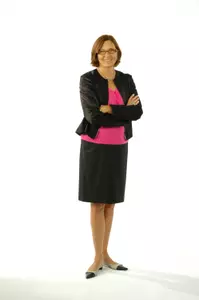
Where Are They Now: Cindy McCollum
5/18/2015 12:00:00 AM | M Club
This feature was published in the April 2014 issue of Gopher Athletics' Ski-U-Mah magazine. Since it's original publication, Cindy McCollum has left the Hennepin County public defender's office. She was assigned to the bench in Dakota County by Minnesota Governor Mark Dayton and currently serves as a judge.
To see this story as it appears in print (complete with fantastic photos) and to read the entire April issue of Ski-U-Mah click here.
Interview by Jake Ricker
Cindy McCollum joined the University of Minnesota women's swimming and diving team in 1976 as an unheralded walk-on from Minnetonka, Minn. Originally a backstroker, McCollum worked on her freestyle and eventually became a part of the Gopher's 200-yard freestyle relay team. That team captured the Big Ten Championship her senior year, 1979-80, and McCollum was named an All-American (along with her three teammates). She and her relay teammates were among the first women swimmers to earn that honor at Minnesota.
After graduating in 1980 with a double major in English and Psychology, McCollum worked for a few years before attending law school, earning her J.D. in 1985. For nearly 30 years since, McCollum has put that law degree to use with the public defender's office of Hennepin County, where she currently serves as a senior attorney. In addition to her day job, McCollum also teaches as an adjunct professor at both William-Mitchell College of Law and Hamline School of Law.
You took an unconventional route to joining the Gopher women's swimming and diving team -- how did you end up in the pool?
My family moved up here in 1973 when I was in high school. I went to Minnetonka where I swam and ran track. Jean (Freeman) had only been at the U for maybe three or four years. She actually was recruiting someone else from my high school team and I just sort of tagged along. So, I was not actively recruited. Then I wasn't going to swim. I was more of a track runner. Someone I ran track with and swam with at Minnetonka found out I was at the U and told my RA, `Hey, get Cindy to swim practice.' (The RA) knocked on my door and said `C'mon, we're going to practice.' I was a little too intimidated to say anything so I thought, `Well, I might as well try it.' And you know, it just worked out. It was a great experience.
Talk a little bit about what it was like to be on the women's swim team in the late 1970s.
It was different. There was a big difference between men's swimming and women's swimming. The men would fly to Nebraska, we would take the bus. The men would have two people in a (hotel) room, and many years we had four in a room. The men would sometimes get breakfast and we would have donuts and Kool-Aid. Things got much better my junior and senior years. I remember we flew to a couple meets. And back then, really no one was on scholarships. A couple of people got grants, maybe for books and a little bit of money but, by my senior year, I got a scholarship and a couple other people got scholarships. So things were starting to turn around. By my senior year I think we had one or two people on the team, as incoming freshmen, who had almost full rides. That was a big deal.
That's a lot of progress in just three years.
Yeah, it did change a lot. By my senior year they were focused on getting us to meets and we had a travel squad, which was different from when I was a freshman or a sophomore. I think there was more money in the budget. We had breakfast and lunches. The focus was on us as athletes, which was a nice. There was just a little more recognition.
And the timing couldn't have been better for you. Your senior season -- 1979-80 -- was your best season.
Yeah, that was the year. That was my best season.
You guys won the 200 relay at the Big Ten Championship that year, right?
We set pool records almost everywhere we went. We set a Big Ten record and we set a pool record at Big Tens. We were undefeated going into Nationals. (At Nationals) we swam against the American record-holders. I was always the start, because Jean worried about me jumping, which was a true fear. The second swimmer got out (of the pool after swimming) and she said, `Cindy, I've never had to swim in a wave before' because we were always in the lead. I said `We're swimming against the American record holders! I think she might beat me to the wall.' But it was an exciting relay. We did well.
Did you only swim freestyle at the U?
Mostly sprint free but also backstroke. I swam the 50, 100, 200 (yard) back. I really didn't start swimming the relays until my junior year. In fact, it was one of my teammates who, at the end of sophomore year, said, `You know Cindy, you should work on your freestyle. You could get on that relay.' She encouraged me. I mentioned it to one of the assistant coaches and he was like `No no no, stick with your backstroke.' I remember being so mad about that and thinking `I'm going to show him. I can do freestyle.' I started really working the freestyle sets a lot more and sort of lobbying to swim it. So I started out as a backstroker, but a lot of backstrokers can swim decent freestyle.
You had the privilege of swimming for the legendary Jean Freeman. What do you remember about her?
Jean was a visionary. She really treated us like athletes. She taught us to think like athletes and trained us like athletes. I know a couple years before me, before Jean was there, (the team) wouldn't even practice six days a week. They'd practice like three times a week. They would treat it like a club team. Jean knew how to train us. She was always at the forefront of a lot of those changes for how women were treated and respected as athletes. Jean treated everyone the same, whether you came in as the superstar or you were a walk-on like me. She was amazing.
What do you do in your current position with the public defender's office?
I'm what's called a senior attorney, which means I'm a supervisor. Right now, I run the division called the Conflicts Division, so it's conflicts and complex crime. I and the lawyers I supervise handle cases that involve some kind of conflict or co-defendants. We tend to do a lot of homicides, burglaries, robberies, crimes that people do with their "friends." I've been a supervisor in the public defender's office since 1996. In the past I've done all three courts -- misdemeanor, juvenile and felony -- and I've supervised lawyers who did all three courts.
What's your normal day, if there is such a thing?
This week I have several sentencings where people have pled guilty. One of my clients recently testified at a homicide trial. I have a hearing tomorrow afternoon, it's called a Rasmussen, where the officer is supposed to come in and testify about why he pulled my client over. So I'll have hearings that are pretty much pre-trial, sentencing, pleas or trials. Every day is a little different.
Do you feel like your athletic experience at the U prepared you for the life you've led since graduation?
Being in competitive athletics really prepares you for working in advocacy because you sort of understand that mentality of hard work and discipline. I think sports prepares people well for a lot of professions. Swimming was the best thing that ever happened to me in undergrad.