University of Minnesota Athletics
The Greatest Prize
9/24/2015 12:00:00 AM | M Club
This feature was published in the September 2015 issue of Gopher Athletics' Ski-U-Mah magazine. To see this story as it appears in print (complete with fantastic photos) and to read the entire September issue of Ski-U-Mah click here.
By Jake Ricker
A Stanley Cup. A Lombardi Trophy. An international medal. A Hall of Fame ring. The trophy cases of former Gopher student-athletes are packed tightly with some of the most exclusive honors sports has to offer.
This display would dazzle most observers, but a modest piece of paper stood out as conspicuously absent when Bobby Bell, Nicole Branagh and Ben Clymer evaluated their accomplishments. There was not a degree from the University of Minnesota among those accolades.
Though their lives are considerably different in many ways, all three coveted a college degree to add to their lengthy list of achievements. Questions of when and how they'd complete their undergraduate studies plagued each of them for years. Practical concerns about time management and class selection piled up quickly, making the challenge of returning to school appear insurmountable.
As a whole, Gopher student-athletes graduate at exemplary levels. The vast majority of student-athletes leave campus holding a degree. But no school, including the U, boasts a perfect graduation rate. Some student-athletes will finish their Gopher careers without a degree for a variety of reasons.
The Gopher Graduation Program offers these student-athletes the opportunity to finish their undergraduate degrees at the University of Minnesota after their playing careers are over by providing financial and academic support, as well as guidance on class selection and other logistical concerns. The pioneering program launched in 2007 and, to-date, has helped nearly 100 former Gophers return to school. Among those, almost 50 have earned their undergraduate degrees, while others continue to work toward graduation.
Doing the Right Thing
Nearly a decade before honoring lifelong scholarships became a standard practice across the Power 5 conferences, the University of Minnesota undertook the effort independently. A taskforce co-chaired by Joel Maturi, who was the University's director of athletics at the time, created a new program that would bring together athletics administration, compliance and the McNamara Academic Center to welcome back former student-athletes and assist them in completing their undergraduate studies.
"There were many good reasons for us to create the Gopher Grad Program, but the most important reason was to honor the educational covenant we have with each and every one of our student-athletes," said Marc Ryan, senior associate athletics director and the program's coordinator. "Offering support to help former student-athletes return to school and graduate is the right thing to do. We're proud that this program was among the first in the country and set an example that we now see other Division I institutions following."
While the U of M was ahead of most Division I schools in this regard, the new program didn't enjoy instant, widespread visibility. In fact, some are still learning about it today.
"I had one former football student-athlete who said `Now with this new NCAA legislation, I want to come back and get my degree,'" Ryan recalled. "I said, `You didn't have to wait this long! We could have done it a while ago.'"
Never Too Late
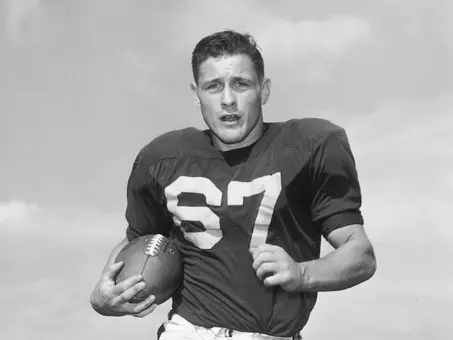
It's been more than 50 years since Hall-of-Famer Bobby Bell last wore a Minnesota Golden Gopher uniform. In those colors, he won a national championship and earned multiple All-America awards before moving on to pro football, where he won a Super Bowl and made multiple All-Pro teams with the Kansas City Chiefs. That half-century gap seemed like an eternity when Bell decided he would return to school to earn his degree and the University had to dig up his old transcript.
"When I asked the guy from the athletics department what I needed, it took him a couple months to find [my transcript]," said Bell. Discovered deep in the University of Minnesota's file archives, Bell's yellowed transcript was barely legible, the hand-written records just managing to withstand the passing years. "Everything was done in pencil back then," he added.
The aging transcript provided a perfect visual representation of just how long it had been since Bell left the University. His story about coming to the U of M in the first place shows how much time has changed from a world in which Bell, at age 18, came to Minnesota instead of in-state schools like North Carolina or Duke because "they didn't accept black [players] at that time.
"All I wanted out of life was the same opportunities as everyone else and I owe that to the University," said Bell. "I didn't get the chance anywhere else."
Minnesota presented Bell with another opportunity 55 years later, this one to finish the degree he came within a few classes of completing during his first stint on campus.
"It was tough. I spent a lot of nights on the road with my iPad. I called friends and asked for help," Bell said, smiling as he reflected on returning to school. "I'm sitting here as a 74-year-old man ... and I'm telling people you can still learn."
Always Part of the Plan
Nicole Branagh couldn't refuse the chance to play for her country. Her collegiate volleyball career ended following a Big Ten co-Player of the Year season as a senior at Minnesota and she immediately transitioned into the U.S. National Team program in Colorado Springs. Before leaving for the Rockies, Branagh talked it over with her coach, Mike Hebert. The move would leave Branagh 20-some
credits short of her degree nearly 1,000 miles from campus.
"It was a great opportunity," Branagh said. "In my head, I was going to do that and come back (to Minnesota) in the fall. But that's when playing pro came up. One thing led to another, doors open and then, all of a sudden, here I was however many years later."
 In the time that passed from that initial decision to leave Minnesota, Branagh spent several years playing indoor with the National Team, a stint which included a bronze medal at the 2003 Pan American Games, and then launched a successful beach volleyball career, one that's included professional success as well as a quarterfinal appearance in the 2008 Olympics.
One Olympiad later, while expecting her first child and a dozen years after her most recent college class, Branagh began the final leg of her academic journey.
"It was always part of my plan (to go back to school) but it just seemed to not fit into my plan each year," said Branagh. "When I knew we were going to try to have a baby, it was a good time for me. ... I wasn't going to be playing volleyball so it seemed like I would have time.
"I just feel like it was a monkey on my back all those years. I always wanted to graduate and each year that passed I wondered `Am I ever going to get this done?'"
Life after Sports (is Scary)
Ben Clymer realized he'd lost a step, "that step" as he called it, following a pair of knee injuries during his time with the NHL's Washington Capitals. At the time, he'd played nearly a decade of professional hockey, a stretch that included a Stanley Cup-winning season with the Tampa Bay Lightning. Clymer knew he wasn't the same player and his time in pro hockey was coming to an end. As it does with almost every athlete, that realization brought a sense of dread.
"Life after sports is scary. It's all you've known. It's what you've been focused on having as a career since you were a little kid," said Clymer. "Making the decision (to go back to school) was hard. Making my first appointment with (academic counselor) Chris Cords was hard. But it got better when I was in there. It was like getting ready for a game. I had this new challenge that I had to tackle, that I wanted to tackle."

Clymer hadn't tackled a class in 15 years when he walked in for that first day. As he pushed himself through the Carlson School of Management he knew the classwork would be difficult, but there were also psychological challenges Clymer had to creatively conquer.
"I sat in the front row all the time, or I tried to anyway," said Clymer. "I knew if I sat in the front row, I could look at the teacher and I could pretend everybody behind me was my age and I didn't have to be the old guy in class."
The ability to imagine all the other students were also in their mid-30s quickly faded though. "They went to a frat party on Friday night and I didn't, so that part was certainly far different," Clymer said with a broad smile.
Just Do It
The prospect of returning to school after 10, 15 or 50 years away would overwhelm almost anyone. Those initial steps to start again, those first days of class and that first mid-term all appear as towering hurdles off in the horizon. Viewed in retrospect though, they're smaller, less intimidating. Veterans of the Gopher Graduation Program are as quick to point that out and encourage others to go back to school as they are to share their stories of anxiety and trepidation.
"I would say to not be scared" about going back to school, Branagh said. "At first, it's a little overwhelming ... but it was a really good experience."
Clymer agreed. "I'm thankful that I made the choice. I try to challenge some of the guys I see now to go back and get their degree. If they chip away slowly with a night class here or there, if you can get them to take that first step, they're going to follow through."
"Minnesota came up with this program for players who have played here on scholarships that gives them another opportunity to come back and get their degree. They take care of that program and that's just awesome. I want to encourage all the other players that leave here or any school to get back and get your degree," Bell proclaimed while clad in his cap and gown on his graduation day last spring.
The Greatest Trophy
Graduating college is among the greatest life accomplishments for most people but, to be fair, most people haven't played a sport at the highest level and captured some of the most notable prizes athletics has to offer. But even in these instances, among those whose trophy cases can barely contain every ribbon, ring and medal, a college degree holds a special spot. Often that's because the degree means as much to others as it does to the graduate.
"In terms of internal pride for what you did, it certainly ranks near the top. It was my challenge and it was on me to get it done," said Clymer. "I never wanted my kids to think if they were successful at sports it meant that school didn't matter."
Branagh felt like she needed to set a strong example for her daughter as well, but she was also excited to share her graduation with her former coach.
"[Mike] would always email me or call and ask me what my plans were for getting my degree," remembered Branagh. "When I first told him I was headed back, I knew that he would be the first call when I finished. He was thrilled."
The oldest of the group fulfilled a promise from long ago when he graduated, even if it took a bit more time than he originally anticipated.
"I promised my dad if [Minnesota] gave me a scholarship that I would get my degree at Minnesota.
He said, `You can do it,'" Bell recalled.
"Coach [Warmath] told me I got the scholarship and I promised my dad I would finish school here. "This is top of the pyramid," Bell added, specifically addressing where graduating fits within his lifetime achievements. "I know he's looking down and saying `I told you that you could it.'"